Sex and Guns (Part Two)

I’m going to shift gears here and talk about a concept that arises from Bowen Family Systems Theory: Societal Regression. Check out this article from Psychology Today: https://www.psychologytoday.com/ca/blog/the-me-in-we/201806/7-signs-societal-regression

To “regress” means to revert to primitive modes of expressing oneself and relating to others. It entails less impulse control, a diminished tolerance for anxiety and reduced capacity for rational thinking such as the ability to make sound decisions. Regression is a response to anxiety and the internal signal that there is imminent threat or danger. Groups have a tendency to regress and behave more primitively than individuals do.

Molly S. Castelloe, “7 Signs of Societal Regression: How to recognize anxiety in a large group.”

I find this tool for analysis helpful when I think about the phenomena I write about in Part One. I can’t help asking why so many people have been caught up in extreme rhetoric and action in reaction to change and uncertainty. What leads people to believe the BS generated by the hard right, erupting from the dark web, spread far and wide on social media? Why do some people decide the only way to deal with their deep-seated anxiety is to take up a weapon, like a legally-obtained gun or arsenal or a legally-rented van, and kill strangers?

Yes, we live in what W. H. Auden called “the kingdom of anxiety.” Things are falling apart. The centre can’t hold, if indeed there is a centre. (I’m still paraphrasing Auden.) There’s nothing new in that. Auden wrote those words in 1942, during the war that came after the war to end all wars. Hitler on one side and Stalin on the other both exemplified and exploited Societal Regression. Many people liken Trump to Hitler. Putin clearly sees himself as a new Stalin, of Peter the Great.

What’s specific to our time is the power of the multiverse of media to feed and accelerate Societal Regression. Social media platforms have a multiplying effect beyond anything that could have been imagined a generation ago. A simple example: Every time a so-called liberal or self-identified progressive person retweets something from “the other side,” and ridicules it or argues against it, the original author’s purpose is fulfilled. More people see the images, hear the words, read the script. Exposure is influence.

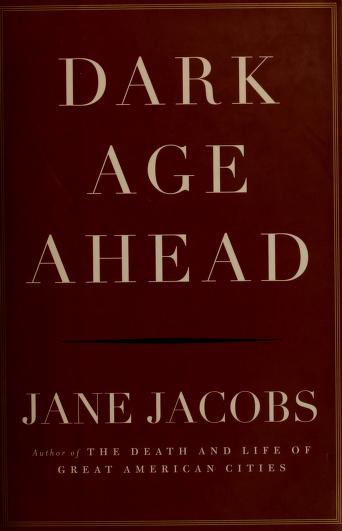
Is it too late? Was Jane Jacobs right when she said, in 2004, that there is a Dark Age Ahead? She warned of trends that have accelerated since she wrote.

More to come…

Sex and Guns (Part One)

I have always wondered why sexuality and gender identity have become the dominant concern for so many people. I start from the church context, where both have become touchstones of orthodoxy, for those the churches charitably call “traditional” and for others who are lumped together as “progressives”. For some, taking a stand for inclusion, or setting limits to participation, or simple exclusion is a mark of the True Church.

I have to look beyond the churches’ preoccupation to the realm of power and politics: The “Don’t Say Gay” laws in American states, the “Don’t Be Gay” laws in places like Hungary and Russia, the “Can’t Be Trans Here” policies around the world.

Christians and others use sacred texts to justify their professed convictions. This goes deeper than quoting scripture or appealing to sweet reason, as we so-called progressives so often do. Until we go deep, underneath what we say we believe, to what we’ve been conditioned to believe, and really believe there can be no argument or dialogue. It’s beyond words.

I finally understand why the Shorter Catechism begins with a question about our reason for being human beings. The answer, though, adds a layer, on top of our humanity. It quickly moves us from primary to secondary concerns. Every system of belief does that, whether it’s religious or not.

Stay with the Presbyterian question, “What is man’s [sic] chief end?”

What are we here for? I’m conditioned by my culture and learned vocabulary to answer with something like the catechism says. We’re here to live in relationship with one another, and to join with God in the ongoing work of creation.

That doesn’t really answer the question. Whatever we believe about the origin of life, we can’t deny that we are programmed to survive, and to contribute to the survival of humanity. I accept that as the ongoing process of evolution. It’s beyond our control.

We are thinking, speaking beings. We are programmed to seek ways to frame and express what’s beyond our control. We seek understanding. That’s why we move from primary concern to secondary concerns. We learn a vocabulary. We live in a tertiary layer of language, experimentation, and argument. We use words both to express and mask anxiety rooted in our primary concern.

When something sparks our anxiety about the survival of anything we rely on to frame our beliefs about meaning and purpose, we can only see it as a threat. A threat to family as we understand and experience it. A threat to an institution we believe must last forever as we have known it. A threat to our secondary understanding and tertiary expression of identity. Underneath it all is fear for the survival of humanity.

Is it a surprise, then, that the hot-button issues of the day have to do with sexual practice, gender identity, procreation, and self-defence?

More to come…

Signs in the Window

On a morning walk I passed our neighbourhood shoe repair shop. There’s a sign in the window, like the signs that used to be common along secondary highways and sideroads. This one says “Believe on the Lord Jesus Christ and be saved,” as so many others like it do or did. The only thing missing was “Box 17 Elmira” on the bottom.

Today I saw a new sign, hand-lettered, all in caps: I AM THE WAY, THE TRUTH, AND THE LIFE. NO ONE COMES TO THE FATHER EXCEPT BY ME, JESUS!

I’ve only been inside that shop once. I brought a pair of shoes I was pretty sure couldn’t be fixed. The Christian cobbler told me I was right and said I should just throw them away. I felt like a fool for having bought them to him. His commanding voice and withering look told me I was what I felt I was. The shoes with the glued-on soles couldn’t be saved. What about my soul?

What about the signs? The messages are cryptic, formed from a vocabulary foreign to most people, always in King James’s version. People who already believe, recognize the vocabulary of salvation, and have read at least a little of the King James know what they mean. Does anyone else who notices them get it? Maybe dropping a line of inquiry to Box 17 Elmira is called for.

Christians who post these signs mean well. They believe they’re doing good, warning all who pass by that they may still be on their way to Hell. There’s fear behind the signs. People who put them up believe the world and all who are in it are damned. They hope to help at least a few of us a way to escape a grim fate that we all deserve. The signs are supposed to be frightening, more warning than invitation.

I don’t know if the shoemaker really was afraid for the sake of my soul. My soul hurts for the sake of fearful Christians, who often live half-lives in this life because they’re so concerned about the next. But I appreciate their sense of urgency. Their signs shout CHANGE OR ELSE!

Should Christians like me be posting CHANGE OR ELSE! signs, too? We say the need for change is urgent. We believe our final destination with God is set. We know the hellish consequences of human action in this world and this life are already real and devastating.

Jesus, and the prophets whose shoulders he stands on, don’t offer you or me the personal hellfire insurance my local cobbler believes we need. Jesus and those prophets do call for change, before we succeed in setting fire to the planet and its population. Maybe we should be good and scared, afraid enough to warn our neighbours that we all need salvation. We can still be saved.

Ordination Part One

It’s the Day of Pentecost! It’s also the time of year when my former UCCan students and colleagues in ministry reminisce about their ordination services. Several Anglican friends were also ordained on or near this holy day. Presbyterians don’t bother with dates when scheduling ordinations. I was ordained in February, during an East Coast ice storm.

Today I recall a time at Toronto School of Theology when I sat at the edge of a group of Anglican students. Both schools were represented. The question was, “Does ordination confer an ontological change?” Those from the college on the north side of Harbord Street said Yes. Those from the south side said No. This Presbyterian was amused. Ordination may be important, but it certainly couldn’t reshape a soul.

Still, I wondered if I would feel something change inside me when I was finally ordained.

Now, after spending two-thirds of my life so far either preparing for or serving in ordered ministry, I realize the soul-shaping happens over time. An ontological change begins, perhaps for some at ordination. This Presbyterian believes it may have begun when I said Yes to God’s call. This Calvinist says it began when I realized my vocation. Perhaps a Calvinist should say there was no change at all. I was who I was before I drew my first breath. I just had to grow up into being who God made me to be.

I’m writing about just one dimension of ordered ministry. Primus inter pares among the three: Vocation, Office, and Profession. I accepted and was a steward of the Office. I did my best to practice the Profession. Both required allegiance to the capital C Church, the institution, and loyalty to the Presbyterian Church in Canada in particular. Neither shaped or expressed my identity as one who has been called.

Neither had anything to do with my being. I’m off the job now, but I’m still fully who I am. Sadly, many of us who have been ordained find it very hard to say that.

More to come…

Why I decided to retire

I posted this to my Glenview blog on February 2. I offer it again so you get a sense of where I’m coming from. It’s a little long for a blog post. More of an essay.

Last night, February 1, the Presbytery of East Toronto gave me permission to retire, as of June 1, 2022. (For non-Presbies, I got the Bishop’s agreement and blessing.) I made my decision weeks ago and informed Glenview’s Session, the Clerk of Presbytery, the PCC Pension Board, and the congregation a month ago. I still needed approval from Presbytery. (Actually, the Pension Board needs Presbytery’s approval.)

Over the last few months, I have written and said a lot about how exhausting ministry in COVID time has been, and still is. I’ve whined a lot. I’m not surprised to discover that some of my friends figure I’m retiring because I just can’t go on under current conditions. If you had asked me in late November, I might have said, “Yes. I’m ready to pull the plug.”

I’ve said a lot about the mental, spiritual, and physical toll church leadership in COVID time has taken. I’ve read a lot, too. As much as I’ve complained, I have always relied on two things. I can get through just about anything, if I know it will end. COVID time will end. We still don’t know when. Over and over, I’ve heard the echo of the voice of a dear friend who reminds me, “The Bible says it came to pass. Not it came to stay.” Simple, but true.

I can endure a lot if I know I’m not alone. The effort required to build and lead worship that engages the congregation, at least some of them, and sustains community has been huge. But the response and support I’ve had, even from people who don’t participate in virtual services or Zoom gatherings, has been amazing.

I took some time around Christmas, after yet another partial shutdown on short notice, to look back to the beginning of my ministry. Next Wednesday, February 9, will be the 39th anniversary of my ordination. One day last week marked the 47th year since an event in my life started me discerning my vocation. I’ve been walking the road I’m still on for a long time. If I add my student years of summer appointments and volunteer leadership to my 39 years ordained, I count almost 45 years of service to the church. I can’t believe it.

Then I counted the pastoral charges I’ve been called to serve. Four. Add to that three more on one-year appointments. I looked beyond those congregations and tried to remember how many times I’ve served on and/or chaired/moderated special, standing, and support committees, judicial commissions, task forces, and working groups for the PCC, General Assembly, Synods, and Presbyteries. I lost count. I realize this may surprise some PCC friends. That’s because most of what I’ve been called on to do was either in confidence, or destined to be buried in minutes and forgotten. Necessary work. Sometimes I was called to do it because it seems, like Liam Neeson in an otherwise forgettable movie, I have “a very particular set of skills, skills I have acquired over a very long career.” I’ve moderated two presbyteries, one of them for three consecutive years. I’ve also moderated two synods. I was even on the ballot for Moderator of General Assembly. I am so glad I wasn’t elected, for my sake and the church’s.

I was privileged to teach in a theological college for 15 years, six of them full-time. During those six years I was Director of a program of education for ministry in the United Church that reached the whole country. I had the wonderful experience of meeting candidates for ordination and congregations from as far east and west, north and south as United churches can be found. I welcomed the first Anglican and Presbyterian students to join in that program.

“Pivot” is still used to describe what pastoral leaders have experienced as “sudden whiplash-inducing jerks” during COVID time. A pivot is something an athlete does, and trains to do smoothly, during a game. Pivoting suggests a smooth swivel in my office chair, from the keyboard to the printer and back. I’ve been thanked, even praised, for pivoting quickly and with apparent ease during COVID time. If that’s so, why is my neck so sore?

Anyone who has been in ministry in the PCC for ten years or more has pivoted many times. I began in the 80s. I had to learn all about Church Growth principles and practices. Remember “Double in a Decade?” Since then, each decade has brought a new theme, a whack of resources, and a reshuffling of cards and titles and mandates. I feel like I’ve had to re-invent myself as a leader and servant at least five times. Ministry in the post-COVID church will call for yet another makeover. I’ve also pivoted from rural ministry to urban, urban to small-town/rural, back to urban (East Coast urban), and then to Midtown Toronto urban. I’ve also pivoted from the congregation to the academy and back again.

Please don’t think I’m boasting. As I’ve said, I can’t believe it myself. I feel I need to share what I decided in December, and why. I have done enough. It’s time to go and rest, at least for a while. I can go with some small satisfaction and not wait till I am totally exhausted and have no more to give to anyone. I can also go knowing the congregation I’ve been serving and trying my best to lead for the last six-and-a-half years is healthy, COVID time notwithstanding.

I worked for many years under the delusion that serving the church is the same as serving its Lord. I know now that’s rarely true. It’s been true when I’ve had the chance to serve people and make a difference in their lives. It has not been true when I’ve knocked myself out serving the institution. I don’t regret my denominational service. I regret that I let that work grow from a responsibility to a reason for being. Too many times my priorities became church or school first, family second, self, third. Sometimes there was a big gap between first and second. For all its gifts and graces, the church is an addictive organization. Some of us never make it to rehab.

I’ve had three bouts of burnout. The first was when I was still at Knox College. It took three to teach me how to read the signs and listen to my body. I also had to recover my awareness that my vocation is about the One who called and calls me, not about my need to respond with perfection. I had to learn to listen again.

I believe, and have taught that there are three dimensions of ordered ministry. There’s Vocation, God’s call to the individual, affirmed by the church. It’s a call to serve and lead the church in some way, but that’s not all of it. It’s as much a call to be as to do. There’s Office. We don’t like to use the vocabulary of hierarchy today, but there’s no denying ordination confers a peculiar kind of authority. It’s not power, but presence. Again, as much being as doing. There’s Profession, mostly doing. It’s developing and using that particular set of skills. It’s also working within a structure of accountability, with high ethical standards. Burnout can happen when the balance of those three is disturbed.

Problems arise when a person fails to live up to the profession of ministry. Sometimes ministers get carried away by delusions of the grandeur of office. Vocation can become such a personal thing that the one who once was called now believes they have an exclusive channel of communication with God. I’ve seen it all.

In COVID time, many of us have questioned how we are fulfilling our vocations, functioning in the office, and performing as the professionals we have trained and striven to be. Both clergy journals and social media report that burnout, sudden resignations, and early retirements are rampant among clergy in North America because of COVID time stress and grief. My retirement will not be one of those sad statistics.

Thanks for your attention, and patience, if you’ve read this whole opus. If you know me at all, you’ll know I could say much more. This piece has been percolating in my head for a long time. I found focus today to pour a little of it out.
A New Day (On an Old Blog)

June 3, 2022

I created this blog a long time ago. I got around to posting on it once. Then I set up a blog on my now-former church’s site and posted occasionally. I used it a lot to communicate with the congregation in the first months of COVID time, posting daily devotions. Then I went back to my old habits, posting personal comments and concerns when I felt moved to do so.

I’m officially retired from ministry now. I feel both more free to share what comes out of my mind and less sure any of it is worth putting into words for others to read.

For one thing, I have to learn more about how WordPress works. Stay tuned!

SORRY ABOUT THE ADS!!!