
$700,000,000?

OK, I admit it. I got taken in by the “substantiated” rumours about Shohei Ohtani’s plane and Yusei Kikuchi’s reservation at a sushi restaurant. Proof that Ohtani was on his way to sign a big deal with Rogers, to become a Blue Jay. I even got a genuine insiders’ tip! I watched and waited all weekend. It was almost inevitable. The Great One signed with the Dodgers. A ten-year contract worth $700,000,000.

It was inevitable. More rumours this week. Was the passenger on that private jet paid by Ohtani’s personal management team? Memes poking fun of, or offering consolation to Blue Jays fans. The best was a banner, hanging in the Dome beside the Jays’ thirty-year-old World Series banners: 2023 – USED AS LEVERAGE.

They were inevitable. Questions like: How can anyone, athlete or not, be worth that much money? How can you enjoy baseball when it’s so obviously just a big, dirty business? Why can’t that money be spent on something better? With so much suffering in the world…

I understand why friends have asked me those questions. I’m asking them, too.

No human being is “worth that much money”. The truth of professional (men’s) sports is that such amounts are the projected value of deals between corporations. The star athletes will benefit, of course. But they’re commodities, products. At lower levels of (men’s) sports they’re indentured servants. Ohtani Corp. and the LA Dodgers Inc. made a deal. It’s a package structured to ensure, or at least gamble on, maximum profits for both parties and their subsidiaries. If Shohei Ohtani stays healthy, continues to perform, helps Dodgers Inc. win a World Series or two, he could put, on average $70,000,000 a year in his bank account. That will be less commissions and management fees, plus product endorsements. Both corporations count on Ohtani being, by some measure, the best 29-year-old player in 2024, and the best 39-year-old player in Major League Baseball in 2033. Risky? Insurance is part of the package.

None of this justifies the huge amounts of money expended on and invested in (male) athletes and sport. But no one will write a cheque for $700,000,000 and put it Ohtani’s hand, or anyone else’s, right away. Likewise $70,000,000. Or $7,000,000. The sad truth of the capitalist enterprise of (men’s) professional sports is that no one in that realm who could write such a cheque, today, for some worthy charitable cause, will. Some team owner or investor might, I suppose. It’s Christmas, after all. But the money behind the paper would never come from the real and projected income streams that support male athletes’ contract packages.

Sure, the Jays raise more than any other team, millions for their charity. That money comes from fans, not from Rogers’ income on investments, or profits, if any, from the Jays Division.

To divert the part of the big money that’s real, not just on paper, to more worthy causes would require the intervention of a power higher than Major League Baseball: God, or a genuine socialist government. Fans of the classic movie Network will remember the pivotal scene, when Peter Finch’s character, the crazed and crazy TV News anchor Howard Beale sits in a darkened room. A corporate king, played so well by Warren Beatty, faces Beale, down a long board room table. He explains the way corporations and the world they rule really work. I can imagine the Commissioner of MLB, or the NFL, or NHL at the head of that table.

Yes, I still go to Jays’ games. I already have my tickets for 2024. I still follow Arsenal, though I can’t watch games. The English Premier League has sold broadcast rights to an expensive pay channel. Owners have to maximize profits and pay those men on the field.

I also shop for groceries. I can’t get everything from my butcher, who only sells goods from small farmers. Or the Chinese immigrant family who work so hard in their fruit and vegetable store. I have to go next door to Loblaws’ for some things. I can also go a little further to Farm Boy. I resent making any contribution to the wealth of Galen, the Weston Family, or their investors. They’re enjoying record profits and dividends this year. When I go to Farm Boy, I’m supporting the Sobey family. Some of them still live in my hometown. Bill was mayor through my childhood. My school years overlapped with Paul, their current Board Chair’s. I like that they require their scions to work their way up through their stores. They’re generous to the town, to charity, to my alma mater, and to the Arts in Canada. Still, like the Westons et al, the Sobeys are making a lot of money off of people like me.

I go to movies, occasionally, though I’m horrified by the amount of money spent to make them. That includes huge payments to the biggest stars. I’m enough of an intellectual snob that I don’t contribute to the profits made on the hugely-expensive comic book series extravaganzas. But I’m still not above paying to see a movie. At least I did the Barbenheimer thing at seniors’ prices.

We all make compromises. We suspend both disbelief and belief by choice. I know there are ways to find entertainment without doing that. It’s impossible to live in the world without compromise. For entertainment, I watch TV or stream programs. I pay Bell for that. Amazon, too. I go to a few plays each year. I pay Mirvish for that. I go to the occasional concert. I pay for that, too. I won’t be at any of Taylor Swift’s concerts, though. As good as she is, she’s not worth… There’s another compromise millions of people choose to make.

My biggie for entertainment is baseball. Most of the men who play pro ball aren’t multi-millionaires. Not yet, anyway. There are many who are on the road to being billionaires, too. Their owners– yes, owners— count on becoming mega-billionaires. It’s my choice to set that aside for a few hours, every few weeks, for six months of the year.

I’ve focused on men’s professional sports. I enjoy watching women play footie. Christine Sinclair forever! If I want to watch a hockey game all the way through, I will watch a women’s game. I enjoy women’s or mixed curling. But the big issues around women’s pro hockey or international football have to do with money. Not with somehow leveling things, so men get less and women more. It’s about equality. The aim of the new Professional Women’s Hockey League is to demonstrate that women who play at the elite level deserve to be paid as much as men are. Team owners will want to maximize profits. I can image, one day, someone declaring “No one is worth that much!” when a female professional athlete’s contract is announced.

Professional Sports around the world are all capitalist enterprises. Billions of us enjoy what they produce. That’s a hard, dirty fact. I can live with it.

I expect Shohei Ohtani will be booed, next time he appears at the Rogers Centre. Not because he’s paid so much. It will be because he spurned Toronto, and the slightly-smaller deal Rogers offered him.
Christmas 2022

John 1:1-14 (Prepared for Queen Street East Presbyterian Church)

We’ve just heard the first verses of John’s Gospel. Let’s listen to Mark, Matthew, and Luke’s opening words.

Mark 1:1: The beginning of the good news of Jesus Christ, the Son of God. Then Jesus suddenly appears, all grown up, to be baptized by the man Luke will tell us is Jesus’ cousin, John the Baptist.

Matthew 1:1: An account of the genealogy of Jesus the Messiah, the son of David, the son of Abraham. That’s Joseph’s family history. Then it’s Joseph’s story.

Luke 1:1,2: Since many have undertaken to set down an orderly account of the events that have been fulfilled among us… I decided… to write an orderly account for you… Luke writes a long letter about Jesus, starting with John the Baptist. He takes his time before he gets to his Christmas story.

John 1:1: In the beginning was the Word (capital W in English). John writes a sort of poem, full of metaphors and symbols, powerful words.

Matthew and Luke charm us with chapters, building up to Jesus’ birth. John takes 13 verses that make us scratch our heads before he tells us how he sees Jesus’ birth.

And the Word became flesh and lived among us, and we have seen his glory, the glory as of a father’s only son, full of grace and truth.

Those words sum up Joseph’s dream in Matthew and the Angel Gabriel’s message to Mary in Luke. They take in the second name Jesus gets in Matthew—Emmanuel—God is with us, and the whole message the angels give the shepherds in Luke. The Word, God’s heart and mind, God’s whole being, became flesh. Human. And lived among us. One of us.

Here’s why I think we need to read John, as well as Luke and Matthew. Luke’s most popular, most remembered story—the one we call The Christmas Story—is about a baby in a manger. Matthew hints at, probably, a toddler by the time those Wise Men find him in Bethlehem.

If that’s all we hold onto from Christmas, then we never really let Jesus grow up.

Maybe that’s why Mark skips over the story of Jesus’ birth. And John lays on the big words about THE WORD, who is God, all of God.

The Word became flesh and lived among us… The image behind those words is of someone who is just like us, moving in with us, sharing life with us.

Seven years ago, Janet and I moved from Halifax to Toronto. We left a medium-sized house, a beautiful old house, with a big farmhouse kitchen on the back of it. We moved into a small apartment, not just because it’s what we can afford in Toronto. The location is perfect. It’s really all we need. We fit into it and it suits us. There’s even room for visitors, though sometimes we have to reserve one of our condo’s guest rooms, downstairs. Which is great, because someone else cleans up when our company goes home.

Whether our guests are family or friends (really, family too), wherever they sleep, we all eat together. With the leaf in, our table stretches halfway across our apartment. That’s the way it should be. That’s hospitality, And the Bible tells us hospitality is sacred. It’s holy.

The Word became flesh and lived among us… Jesus comes into the world to be God with us, and he counts on our hospitality. Counts on us to welcome him, to accept him as one of the family. It doesn’t matter how many square feet we inhabit. Doesn’t matter if we can put a whole turkey dinner on the table, or beans and wieners. Honestly, as much as I enjoy making and serving that Christmas dinner. I find it’s easier to remember he’s with me when it’s franks and beans, or grilled cheese.

The Word became flesh and lived among us… Not just for Christmas Day, every day.

Come to think of it, Luke’s story is about human, fleshy stuff: The conception of John the Baptist. Then Jesus. Two women. Two wombs. One too old and another awfully young. John and Jesus are both born in the plain old human way. They don’t descend from heaven all grown-up.

Luke doesn’t describe Jesus’ birth, but he reminds us that a newborn needs cleaning off and wrapping up, and a place to rest to give his exhausted mother a rest. I know the Christmas carols say baby Jesus doesn’t make a peep. I think he exercises his little lungs and does everything a flesh and blood baby does. Mothers here, forget the old songs and paintings. Remember what it was like when you gave birth. You know what really happens in that little corner in Bethlehem.

The Word became flesh and lived among us… Too many of us believe we’re carrying around too much flesh. OK, some of us are. But we’re all made of flesh. We know everything that means. So does the One whose birth we’re celebrating today.

We might wish he would reach down and rescue us from a lot of what comes of being made of flesh. Human. But think of this: Jesus doesn’t excuse himself from any of it.

The Word became flesh and lived among us… Jesus knows the pains and pleasures, the needs and the moods, the joy and the sorrow of being human. He grows up like anyone born, in a time when too many infants and children die so very young. No, he doesn’t experience growing old. As a man of his time, though, he certainly grows up surrounded by elders. When he dies, as a man of his time, he’s at least middle middle-aged. We only have details for his last three years or so. But what a life he lives, with and for fellow humans of all sorts and sizes!

The Word became flesh and lived among us… One thing we should never say is, I’m only human! Jesus’ way of being all those things Luke says the angels sing and we repeat in our Christmas carols: Saviour, Christ, Lord Another angel calls him Emmanuel, God is with us. Jesus’ way of being all those things is to be human, one of us.

To be human is good, even sacred, holy. Do we accept that gift? Do we accept the responsibilities of being human? We have it in us to change lives. To change the world. Yes, we do.

Sometimes we think and act as if we’re more than human. Too often we think and speak of others, and treat them, as if they’re less than human. Maybe we don’t know that our English words—human and humble—come from the same root, the Earth all humans live on.That’s why our Bible begins with a story about God making the first humans out of dirt, the Earth.

The Word became flesh and lived among us… Lives among us and within us, in our flesh, every day.

You may have come across a poster in a window, or a sticker on a car bumper, or a meme online: Keep Christ in Christmas or Put Christ back into Christmas. They’ve been around for years. I watch for someone to reply to those slogans. Often it comes like this.

Want to keep Christ in Christmas? Feed the hungry. Clothe the naked. Forgive the guilty. Welcome the unwanted. Care for the ill. Love your enemies and do unto others as you would have them do unto you.

All those things come from the Bible, most of them from Jesus. None of them is about religion, or power, or glory. All are about how humans treat other humans.

There’s a new quotable quote making the rounds this year. Rather than putting Christ back into Christmas, how about putting Christ back into Christians?

In yesterday’s Star, Michael Coren wrote about what those words mean for us.

Feel for and with others, care for them as if they were family, understand those who insult and condemn you, respect creation and people, forgive, embrace, include, and love. Most of all, love. https://www.thestar.com/opinion/contributors/2022/12/24/putting-christ-back-into-christian.html

That’s how God’s Word becomes flesh, moves in and saves the world.

Balkans

We have just come home from a trip we planned before COVID struck. Not that COVID has gone away. We’re just tired of it and more willing to risk getting it than ever before. Some precautions are still in place, including masks on flights. Our proof of vaccinations is on file in more places than ever before. I discovered when I returned to Canada that it’s even linked to our passports, via the ArriveCan app.

We flew to Dubrovnik, Croatia, to begin a six-day journey across the country (with a brief crossing through Bosnia-Herzegovina). Then we did what we so love to do. We got on a boat to cruise down the Danube. We were supposed to be on the water for seven days, but the closer the river flows to its delta, the less water there is to float in. This is an annual problem, made worse by the extreme heat of this summer. Most days we experienced 40 degrees C, without a cloud in the sky. Even breezes on the river were warm and not always refreshing.

Beyond that, we had the chance to see parts of Serbia, Bulgaria, and more of Romania than was planned, due to the extra day on land. In fact, we had a third full day in Bucharest, due to a 24 hour strike against Lufthansa. Another day in the Paris of the East was no hardship.

Some impressions:

The Psalm says, “Weeping may endure for a night, but joy comes in the morning.” Croatia, Bosnia etc., and Serbia used to be parts of Yugoslavia. Bulgaria and Romania were independent, to differing degrees. Yugoslavian Communism has been called “Coca Cola Communism”. The dictator, Tito, resisted the USSR as much as he could manage, and did not shut out most of the rest of the world. The story in Bulgaria includes Soviet domination. In Romania I wondered if Ceaucescu’s craziness made Moscow decide to watch from a distance. We heard stories of life in the era of Communism, but with many twists.

This is where the Psalm comes in. In the great sweep of the history of the Balkan Peninsula, the 45 years of Communism are but a night. A very dark, night, yes. But one night when compared to the centuries of Ottoman occupation of Croatia, Bosnia, Serbia, and Bulgaria. And the resistance and readiness to defend against it across the Danube in Romania. Our guides and speakers were all old enough to remember at least the last hours of that night. We were surrounded by the generation born since the dawn broke. The only Bloc they know is the European Union. Croatia, Bulgaria, and Romania are in it. Serbia hopes to enter it, but still enjoys great benefits from the EU.

The democracies are still young, often corrupt. But they function, largely due to the EU’s watchful eye. And the money, of course. The sun may be shining, but the shadows of the night linger. My sense of the people I encountered is that they are keenly aware of the whole history of their countries, good and bad. Their stories are of war and oppression, imperial occupation and sometimes-bloody liberation. Each country has in its story a Golden Age of independence, prosperity, and even forms of democracy. I believe this sets them apart from Russia and many of the former Soviet Republics, where there has only been autocracy. There has always been a Tsar, a Stalin, or a Putin. That’s why it’s so easy for Putin to portray democracy as decadent and threatening to Russian culture.

After Tito’s death, Croatia, Serbia, Bosnia were thrown into a decade of conflict. With help from NATO, including Canada, a peace that’s still uneasy was established. Croatia has progressed further than its neighbours. But all have moved forward. Bulgaria’s journey into daylight happened in stages. Romania’s was short and sharp. The Dictator and his wife didn’t fall. They had to be pushed. They didn’t die in prison. They were in jail for four days, then executed. These stories are still fresh, but they have their places in more than a thousand years of history.

Tomatoes. Yes, tomatoes. I’ve never seen or tasted such tomatoes! One day my lunch was entirely of tomatoes, garnished with some Romanian fresh cheese, and a little olive oil. I’ve never enjoyed eating so much watermelon so much. Serbian farmers say that, if they want to know what’s going on in the world around them, they just have to stand on one of the melons in their fields. They’ll be able to see for miles around them. Those are just two– four with the cheese and oil– of the products of the fertile land of the Balkan plains. I saw field after field of tilled soil, black as coal. Massive vineyards. Hay, wheat, corn, canola, and sunflowers. Sunflowers everywhere. The sunflower could be a symbol of any of the countries we visited, If Ukraine hadn’t claimed it first.

There’s sunflower oil in every kitchen. The rest of the plants go along with the corn to feed livestock. During the night, all the land was held “for the people” by governments, that drove people off the land and into the cities. They were torn away from abundance to a life of rationing and hunger. Now in daylight the people have their land back. In many places large farms are held by cooperatives. Villages still bear the scars of depopulation and deprivation. Most people still live in cities. But the fields display abundance and renewed and renewing life. In Romania alone there are 10 million hectares (about 25 million acres) of land under cultivation. Not by the way, tens of thousands of those hectares are devoted to wine grapes. On one evening I was moved to post to Facebook: Romanian Merlot is not an oxymoron!

And tomatoes flourish on farms, in backyards, on urban balconies.

I will write more. Meanwhile, I’ll go looking for some deep red, juicy tomatoes, anywhere but in a Canadian supermarket.

I’ll add some pictures when I figure out how to do it.

Going to Church

July 3, 2022

I can’t remember if the last time I was in a church building was when I went to vote at the local Anglican Church or when I stepped inside a downtown cathedral during Doors Open Toronto. The last service I attended was on May 1. I conducted that one and preached.

I have enjoyed my quiet Sunday mornings. I’m just starting to feel a little restless. It’s time to think about where I might worship.

Like a lot of pastors, I have not often attended services during summer vacation. Some of us have admitted that along the way. Many of us find it difficult to suspend critical judgment and just let others lead us in worship and preach to us. I find it hard not to analyze liturgies, re-write sermons, and imagine how I would have done it. That makes it hard to engage in worship.

Pastors often say they need to find alternative places to worship while they’re still active in congregational ministry. They don’t experience worship while they’re leading it. I have been blessed to serve churches, especially Glenview, where I worshiped while I presided. This was certainly true during sacraments. Music was a big part of it. But it took me almost thirty years to learn to relax and let the liturgy flow, and move me with it once it began.

When I went to teach full time in 2009, I worshiped and preached in United Churches across the country. Most of them were served and led by “my” AST students. When I was at home on Sunday I attended our neighbourhood United Church. I was too familiar with the Presbyterian congregations in Halifax and Dartmouth. I needed to sense displacement. St. John’s United offered that. They worshiped in an alternate space and were still experiencing displacement. It took a few Sundays, but I did find comfort in being a worshiper among others, sitting in the back of the room. It helped that I already knew and appreciated the preacher. She fed my soul every week, and occasionally blew my mind, too.

Colleagues have already asked me which Presbyterian congregation Janet and I will join. I’ve said we intend to wait a little while, and they shouldn’t assume we’ll choose within the PCC. I’ve talked to another recent retiree, married to a minister as I am. She said the same thing. I know we’re not the only ones. Beyond the problems– better say challenges— that preoccupy the PCC, there are exhausting, enervating politics in every denomination. Those of us who served our churches by participating in what one friend calls the ecclesiocracy, especially, need to step out of it. At least for a time.

I know it’s not all about me and what I want. Still, there are some things that I know can break through my retired-minister-retired-homiletics-professor defenses. I’m not looking for perfection. I am looking for perfection in the Biblical sense. That is what is done in service of a purpose, and clearly suits that purpose and none other.

I hunger for excellence. Not the biggest. Not the best, by any common measure. I need to see and hear and feel that everyone present is doing their absolute most to offer God something beautiful. I have found it in worship in places big and small and in-between. I’ve experienced it in preaching that I would give an A-plus and through preachers and sermons that fit their context, even if they would fall flat in a classroom, a chapel, or any other parish pulpit.

It helps me if I discover that everyone who leads a service– everyone present, in fact– enjoys what they’re doing. (I think there’s something in the Shorter Catechism about that.)

All of this means I’ll be doing some church-shopping. Better to say congregation-shopping? When I’m ready to engage with other people and build relationships. I don’t yet understand why, but I know I’m not ready yet.

In the meantime I rest, I meditate, I read, and I remember.

Sex and Guns (Part Two)

I’m going to shift gears here and talk about a concept that arises from Bowen Family Systems Theory: Societal Regression. Check out this article from Psychology Today: https://www.psychologytoday.com/ca/blog/the-me-in-we/201806/7-signs-societal-regression

To “regress” means to revert to primitive modes of expressing oneself and relating to others. It entails less impulse control, a diminished tolerance for anxiety and reduced capacity for rational thinking such as the ability to make sound decisions. Regression is a response to anxiety and the internal signal that there is imminent threat or danger. Groups have a tendency to regress and behave more primitively than individuals do.

Molly S. Castelloe, “7 Signs of Societal Regression: How to recognize anxiety in a large group.”

I find this tool for analysis helpful when I think about the phenomena I write about in Part One. I can’t help asking why so many people have been caught up in extreme rhetoric and action in reaction to change and uncertainty. What leads people to believe the BS generated by the hard right, erupting from the dark web, spread far and wide on social media? Why do some people decide the only way to deal with their deep-seated anxiety is to take up a weapon, like a legally-obtained gun or arsenal or a legally-rented van, and kill strangers?

Yes, we live in what W. H. Auden called “the kingdom of anxiety.” Things are falling apart. The centre can’t hold, if indeed there is a centre. (I’m still paraphrasing Auden.) There’s nothing new in that. Auden wrote those words in 1942, during the war that came after the war to end all wars. Hitler on one side and Stalin on the other both exemplified and exploited Societal Regression. Many people liken Trump to Hitler. Putin clearly sees himself as a new Stalin, of Peter the Great.

What’s specific to our time is the power of the multiverse of media to feed and accelerate Societal Regression. Social media platforms have a multiplying effect beyond anything that could have been imagined a generation ago. A simple example: Every time a so-called liberal or self-identified progressive person retweets something from “the other side,” and ridicules it or argues against it, the original author’s purpose is fulfilled. More people see the images, hear the words, read the script. Exposure is influence.

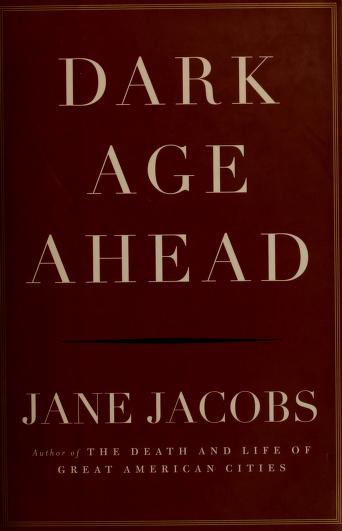
Is it too late? Was Jane Jacobs right when she said, in 2004, that there is a Dark Age Ahead? She warned of trends that have accelerated since she wrote.

More to come…

Sex and Guns (Part One)

I have always wondered why sexuality and gender identity have become the dominant concern for so many people. I start from the church context, where both have become touchstones of orthodoxy, for those the churches charitably call “traditional” and for others who are lumped together as “progressives”. For some, taking a stand for inclusion, or setting limits to participation, or simple exclusion is a mark of the True Church.

I have to look beyond the churches’ preoccupation to the realm of power and politics: The “Don’t Say Gay” laws in American states, the “Don’t Be Gay” laws in places like Hungary and Russia, the “Can’t Be Trans Here” policies around the world.

Christians and others use sacred texts to justify their professed convictions. This goes deeper than quoting scripture or appealing to sweet reason, as we so-called progressives so often do. Until we go deep, underneath what we say we believe, to what we’ve been conditioned to believe, and really believe there can be no argument or dialogue. It’s beyond words.

I finally understand why the Shorter Catechism begins with a question about our reason for being human beings. The answer, though, adds a layer, on top of our humanity. It quickly moves us from primary to secondary concerns. Every system of belief does that, whether it’s religious or not.

Stay with the Presbyterian question, “What is man’s [sic] chief end?”

What are we here for? I’m conditioned by my culture and learned vocabulary to answer with something like the catechism says. We’re here to live in relationship with one another, and to join with God in the ongoing work of creation.

That doesn’t really answer the question. Whatever we believe about the origin of life, we can’t deny that we are programmed to survive, and to contribute to the survival of humanity. I accept that as the ongoing process of evolution. It’s beyond our control.

We are thinking, speaking beings. We are programmed to seek ways to frame and express what’s beyond our control. We seek understanding. That’s why we move from primary concern to secondary concerns. We learn a vocabulary. We live in a tertiary layer of language, experimentation, and argument. We use words both to express and mask anxiety rooted in our primary concern.

When something sparks our anxiety about the survival of anything we rely on to frame our beliefs about meaning and purpose, we can only see it as a threat. A threat to family as we understand and experience it. A threat to an institution we believe must last forever as we have known it. A threat to our secondary understanding and tertiary expression of identity. Underneath it all is fear for the survival of humanity.

Is it a surprise, then, that the hot-button issues of the day have to do with sexual practice, gender identity, procreation, and self-defence?

More to come…

Signs in the Window

On a morning walk I passed our neighbourhood shoe repair shop. There’s a sign in the window, like the signs that used to be common along secondary highways and sideroads. This one says “Believe on the Lord Jesus Christ and be saved,” as so many others like it do or did. The only thing missing was “Box 17 Elmira” on the bottom.

Today I saw a new sign, hand-lettered, all in caps: I AM THE WAY, THE TRUTH, AND THE LIFE. NO ONE COMES TO THE FATHER EXCEPT BY ME, JESUS!

I’ve only been inside that shop once. I brought a pair of shoes I was pretty sure couldn’t be fixed. The Christian cobbler told me I was right and said I should just throw them away. I felt like a fool for having bought them to him. His commanding voice and withering look told me I was what I felt I was. The shoes with the glued-on soles couldn’t be saved. What about my soul?

What about the signs? The messages are cryptic, formed from a vocabulary foreign to most people, always in King James’s version. People who already believe, recognize the vocabulary of salvation, and have read at least a little of the King James know what they mean. Does anyone else who notices them get it? Maybe dropping a line of inquiry to Box 17 Elmira is called for.

Christians who post these signs mean well. They believe they’re doing good, warning all who pass by that they may still be on their way to Hell. There’s fear behind the signs. People who put them up believe the world and all who are in it are damned. They hope to help at least a few of us a way to escape a grim fate that we all deserve. The signs are supposed to be frightening, more warning than invitation.

I don’t know if the shoemaker really was afraid for the sake of my soul. My soul hurts for the sake of fearful Christians, who often live half-lives in this life because they’re so concerned about the next. But I appreciate their sense of urgency. Their signs shout CHANGE OR ELSE!

Should Christians like me be posting CHANGE OR ELSE! signs, too? We say the need for change is urgent. We believe our final destination with God is set. We know the hellish consequences of human action in this world and this life are already real and devastating.

Jesus, and the prophets whose shoulders he stands on, don’t offer you or me the personal hellfire insurance my local cobbler believes we need. Jesus and those prophets do call for change, before we succeed in setting fire to the planet and its population. Maybe we should be good and scared, afraid enough to warn our neighbours that we all need salvation. We can still be saved.

Ordination Part One

It’s the Day of Pentecost! It’s also the time of year when my former UCCan students and colleagues in ministry reminisce about their ordination services. Several Anglican friends were also ordained on or near this holy day. Presbyterians don’t bother with dates when scheduling ordinations. I was ordained in February, during an East Coast ice storm.

Today I recall a time at Toronto School of Theology when I sat at the edge of a group of Anglican students. Both schools were represented. The question was, “Does ordination confer an ontological change?” Those from the college on the north side of Harbord Street said Yes. Those from the south side said No. This Presbyterian was amused. Ordination may be important, but it certainly couldn’t reshape a soul.

Still, I wondered if I would feel something change inside me when I was finally ordained.

Now, after spending two-thirds of my life so far either preparing for or serving in ordered ministry, I realize the soul-shaping happens over time. An ontological change begins, perhaps for some at ordination. This Presbyterian believes it may have begun when I said Yes to God’s call. This Calvinist says it began when I realized my vocation. Perhaps a Calvinist should say there was no change at all. I was who I was before I drew my first breath. I just had to grow up into being who God made me to be.

I’m writing about just one dimension of ordered ministry. Primus inter pares among the three: Vocation, Office, and Profession. I accepted and was a steward of the Office. I did my best to practice the Profession. Both required allegiance to the capital C Church, the institution, and loyalty to the Presbyterian Church in Canada in particular. Neither shaped or expressed my identity as one who has been called.

Neither had anything to do with my being. I’m off the job now, but I’m still fully who I am. Sadly, many of us who have been ordained find it very hard to say that.

More to come…

Why I decided to retire

I posted this to my Glenview blog on February 2. I offer it again so you get a sense of where I’m coming from. It’s a little long for a blog post. More of an essay.

Last night, February 1, the Presbytery of East Toronto gave me permission to retire, as of June 1, 2022. (For non-Presbies, I got the Bishop’s agreement and blessing.) I made my decision weeks ago and informed Glenview’s Session, the Clerk of Presbytery, the PCC Pension Board, and the congregation a month ago. I still needed approval from Presbytery. (Actually, the Pension Board needs Presbytery’s approval.)

Over the last few months, I have written and said a lot about how exhausting ministry in COVID time has been, and still is. I’ve whined a lot. I’m not surprised to discover that some of my friends figure I’m retiring because I just can’t go on under current conditions. If you had asked me in late November, I might have said, “Yes. I’m ready to pull the plug.”

I’ve said a lot about the mental, spiritual, and physical toll church leadership in COVID time has taken. I’ve read a lot, too. As much as I’ve complained, I have always relied on two things. I can get through just about anything, if I know it will end. COVID time will end. We still don’t know when. Over and over, I’ve heard the echo of the voice of a dear friend who reminds me, “The Bible says it came to pass. Not it came to stay.” Simple, but true.

I can endure a lot if I know I’m not alone. The effort required to build and lead worship that engages the congregation, at least some of them, and sustains community has been huge. But the response and support I’ve had, even from people who don’t participate in virtual services or Zoom gatherings, has been amazing.

I took some time around Christmas, after yet another partial shutdown on short notice, to look back to the beginning of my ministry. Next Wednesday, February 9, will be the 39th anniversary of my ordination. One day last week marked the 47th year since an event in my life started me discerning my vocation. I’ve been walking the road I’m still on for a long time. If I add my student years of summer appointments and volunteer leadership to my 39 years ordained, I count almost 45 years of service to the church. I can’t believe it.

Then I counted the pastoral charges I’ve been called to serve. Four. Add to that three more on one-year appointments. I looked beyond those congregations and tried to remember how many times I’ve served on and/or chaired/moderated special, standing, and support committees, judicial commissions, task forces, and working groups for the PCC, General Assembly, Synods, and Presbyteries. I lost count. I realize this may surprise some PCC friends. That’s because most of what I’ve been called on to do was either in confidence, or destined to be buried in minutes and forgotten. Necessary work. Sometimes I was called to do it because it seems, like Liam Neeson in an otherwise forgettable movie, I have “a very particular set of skills, skills I have acquired over a very long career.” I’ve moderated two presbyteries, one of them for three consecutive years. I’ve also moderated two synods. I was even on the ballot for Moderator of General Assembly. I am so glad I wasn’t elected, for my sake and the church’s.

I was privileged to teach in a theological college for 15 years, six of them full-time. During those six years I was Director of a program of education for ministry in the United Church that reached the whole country. I had the wonderful experience of meeting candidates for ordination and congregations from as far east and west, north and south as United churches can be found. I welcomed the first Anglican and Presbyterian students to join in that program.

“Pivot” is still used to describe what pastoral leaders have experienced as “sudden whiplash-inducing jerks” during COVID time. A pivot is something an athlete does, and trains to do smoothly, during a game. Pivoting suggests a smooth swivel in my office chair, from the keyboard to the printer and back. I’ve been thanked, even praised, for pivoting quickly and with apparent ease during COVID time. If that’s so, why is my neck so sore?

Anyone who has been in ministry in the PCC for ten years or more has pivoted many times. I began in the 80s. I had to learn all about Church Growth principles and practices. Remember “Double in a Decade?” Since then, each decade has brought a new theme, a whack of resources, and a reshuffling of cards and titles and mandates. I feel like I’ve had to re-invent myself as a leader and servant at least five times. Ministry in the post-COVID church will call for yet another makeover. I’ve also pivoted from rural ministry to urban, urban to small-town/rural, back to urban (East Coast urban), and then to Midtown Toronto urban. I’ve also pivoted from the congregation to the academy and back again.

Please don’t think I’m boasting. As I’ve said, I can’t believe it myself. I feel I need to share what I decided in December, and why. I have done enough. It’s time to go and rest, at least for a while. I can go with some small satisfaction and not wait till I am totally exhausted and have no more to give to anyone. I can also go knowing the congregation I’ve been serving and trying my best to lead for the last six-and-a-half years is healthy, COVID time notwithstanding.

I worked for many years under the delusion that serving the church is the same as serving its Lord. I know now that’s rarely true. It’s been true when I’ve had the chance to serve people and make a difference in their lives. It has not been true when I’ve knocked myself out serving the institution. I don’t regret my denominational service. I regret that I let that work grow from a responsibility to a reason for being. Too many times my priorities became church or school first, family second, self, third. Sometimes there was a big gap between first and second. For all its gifts and graces, the church is an addictive organization. Some of us never make it to rehab.

I’ve had three bouts of burnout. The first was when I was still at Knox College. It took three to teach me how to read the signs and listen to my body. I also had to recover my awareness that my vocation is about the One who called and calls me, not about my need to respond with perfection. I had to learn to listen again.

I believe, and have taught that there are three dimensions of ordered ministry. There’s Vocation, God’s call to the individual, affirmed by the church. It’s a call to serve and lead the church in some way, but that’s not all of it. It’s as much a call to be as to do. There’s Office. We don’t like to use the vocabulary of hierarchy today, but there’s no denying ordination confers a peculiar kind of authority. It’s not power, but presence. Again, as much being as doing. There’s Profession, mostly doing. It’s developing and using that particular set of skills. It’s also working within a structure of accountability, with high ethical standards. Burnout can happen when the balance of those three is disturbed.

Problems arise when a person fails to live up to the profession of ministry. Sometimes ministers get carried away by delusions of the grandeur of office. Vocation can become such a personal thing that the one who once was called now believes they have an exclusive channel of communication with God. I’ve seen it all.

In COVID time, many of us have questioned how we are fulfilling our vocations, functioning in the office, and performing as the professionals we have trained and striven to be. Both clergy journals and social media report that burnout, sudden resignations, and early retirements are rampant among clergy in North America because of COVID time stress and grief. My retirement will not be one of those sad statistics.

Thanks for your attention, and patience, if you’ve read this whole opus. If you know me at all, you’ll know I could say much more. This piece has been percolating in my head for a long time. I found focus today to pour a little of it out.

A New Day (On an Old Blog)

June 3, 2022

I created this blog a long time ago. I got around to posting on it once. Then I set up a blog on my now-former church’s site and posted occasionally. I used it a lot to communicate with the congregation in the first months of COVID time, posting daily devotions. Then I went back to my old habits, posting personal comments and concerns when I felt moved to do so.

I’m officially retired from ministry now. I feel both more free to share what comes out of my mind and less sure any of it is worth putting into words for others to read.

For one thing, I have to learn more about how WordPress works. Stay tuned!

SORRY ABOUT THE ADS!!!